What Can Dogs Eat on Thanksgiving? Safe Snacks vs. Kitchen Hazards
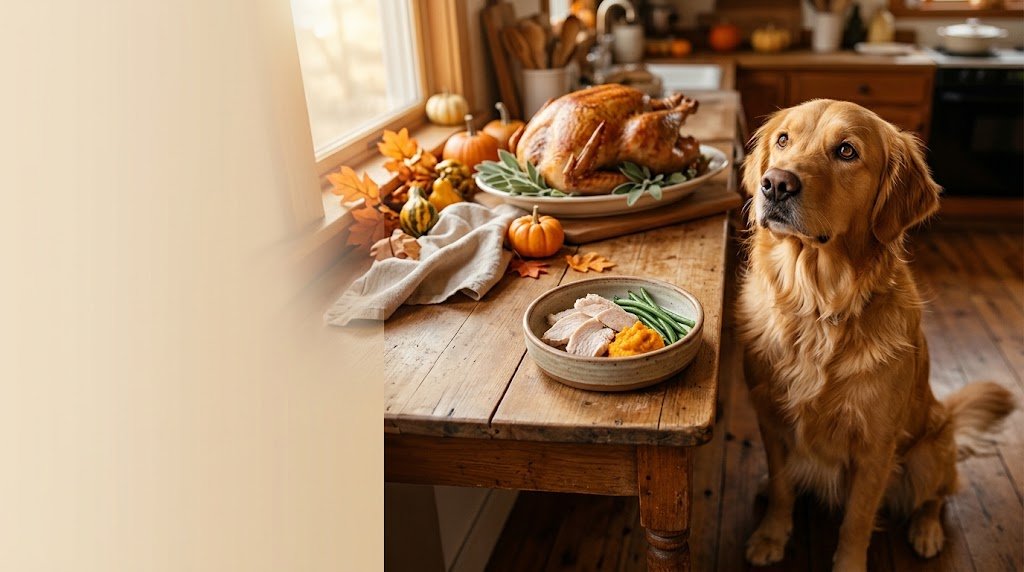
Picture this: it is 4:00 PM on Thanksgiving Day. The kitchen smells like toasted sage and roasted meat. As you carve the turkey, a pair of dark, pleading eyes watches every move from under the table. You want to share the feast. After all, your dog is part of the family.
But before you drop that piece of skin or spoonful of gravy into their bowl, you need to know where the invisible boundary lies between a harmless holiday treat and a late-night emergency vet visit.
The good news: your dog can enjoy a few bites from the Thanksgiving table. The catch: the list of safe foods is short, and the list of hidden dangers is longer than most people expect. Here is how to tell them apart.
The Thanksgiving Table: What Is Safe in Small Portions?
The ASPCA’s Thanksgiving safety guidance and the veterinary toxicologists at the ASPCA Poison Control Center (APCC) agree on the basic principle. Plain, simple, cooked foods in tiny amounts are fine. Rich, seasoned, or sweetened dishes are not. Pet Poison Helpline, another US animal poison control service, says the same: the trouble rarely comes from the turkey itself. It comes from everything added to it.
White Meat Turkey: Skinless and Unseasoned
Plain turkey breast is the safest thing on the table. A few small pieces make a lovely treat.
Three rules apply:
- Cooked through. Undercooked poultry carries bacteria. Make sure it is cooked all the way.
- Boneless. Cooked bones turn brittle and splinter.
- Skinless and unseasoned. Set aside a few pieces before you add butter, garlic, herbs, or brine.
The simplest trick: cut your dog’s portion first, then season the rest of the bird.
Plain Vegetables: Sweet Potatoes and Green Beans
Plain cooked sweet potato and green beans offer fiber and a little extra nutrition. Your dog does not care about marshmallow toppings or green bean casserole, and neither should you, on their behalf.
Keep them plain. No butter. No salt. No cream of mushroom soup. A spoonful of mashed sweet potato or a few steamed green beans is plenty.
Pumpkin Puree: The Golden Standard
Plain pumpkin is gentle on a dog’s stomach and a classic digestive helper. But read the label carefully. You want 100% pure pumpkin puree, nothing else.
Pumpkin pie filling is a different product. It contains added sugar and spices, and some mixes can include sweeteners that are dangerous for dogs (more on that below). One tablespoon of pure puree, stirred into regular food, is a safe holiday upgrade.
The Silent Pancreatitis Risk: Why Fatty Skin and Gravy Are Off-Limits
Turkey skin looks harmless. It is not.
The pancreas helps dogs digest fat. When a dog suddenly eats a large amount of rich, greasy food, the pancreas can become inflamed. Digestive enzymes activate too early and begin to irritate the organ itself. This is acute pancreatitis.
Fat floods in. The pancreas overreacts. The abdomen becomes painful.
Symptoms often show up a day or two after the feast, which is why the cause is easy to miss. Watch for repeated vomiting, a hunched posture, belly pain, loss of appetite, diarrhea, and lethargy. Pet Poison Helpline notes that serious cases need hospitalization.
That means skin, drippings, gravy, buttery mashed potatoes, and fat trimmings all belong in the “no” pile. Small dogs are especially vulnerable, since a modest amount of fat is a very large dose for their size.
Hidden Poisons on the Kitchen Counter
The most dangerous items are often not on the dinner table at all. They sit on the counter, in the stuffing, or in the trash.
Alliums: Onions, Garlic, and Shallots
Onions, garlic, shallots, leeks, and chives are toxic to dogs. Raw, cooked, or powdered, they all count.
These foods damage red blood cells. Damaged cells burst early. The dog can become anemic.
The toxicity can build up over time, and the effects may not appear right away. This is why stuffing, gravy, and seasoned side dishes are risky even when your dog only gets “a little.” Most holiday recipes are built on onion and garlic.
Raw Yeast Dough: Expansion and Alcohol Toxicity
Unbaked bread dough is a double hazard. According to the ASPCA, raw dough expands in the stomach, and the yeast then produces alcohol as it ferments.
Dough expands. Ethanol absorbs. The stomach distends.
The result can be painful bloating plus alcohol poisoning. A dog that steals rising rolls off the counter needs veterinary attention. Keep dough in the oven or somewhere your dog absolutely cannot reach, such as a closed pantry.
Xylitol / Birch Sugar: The Sugar-Free Trap in Desserts
Xylitol, sometimes labeled “birch sugar,” is a sweetener found in sugar-free gum, baked goods, some peanut butters, and certain desserts. In dogs, it triggers a rapid release of insulin. Blood sugar crashes. In larger amounts, it can also cause liver failure.
This is a true emergency. Signs include weakness, vomiting, stumbling, and seizures. Check ingredient labels on anything sugar-free, and keep purses and bags out of reach, because gum is a common source.
Bouillon, Bones, and Strings: Physical and Sodium Dangers
Some Thanksgiving hazards are not toxic. They are mechanical.
Cooked bones break into sharp fragments. Those can puncture the mouth, throat, stomach, or intestines. Never offer the carcass, the drumstick, or the wishbone.
Kitchen twine and netting can cause intestinal blockages. A string that smells like turkey is irresistible. Remove it before you carve, and take the trash out immediately afterward.
Salty broth and bouillon present another problem. The APCC warns that very salty foods can lead to excess sodium intake. That can cause stomach upset and, in severe cases, neurological signs such as seizures. Do not pour pan juices or stock over your dog’s kibble as a “special treat.”
The 10% Rule: Portions and Digestibility
Even safe foods need limits. A common veterinary guideline is that treats should make up no more than 10% of your dog’s daily calories. The rest should come from their regular balanced diet.
What does that look like in practice?
- Small dog: a few bite-sized pieces of turkey and a teaspoon of plain pumpkin.
- Medium dog: a small handful of turkey and a tablespoon of vegetables.
- Large dog: a slightly bigger portion. Still modest.
A sudden change in diet is hard on the digestive system. Stick to your dog’s normal meal schedule, and add the holiday extras on top in small amounts. If you are unsure how many calories your dog needs, ask your veterinarian.
One more tip for guests: tell them the rules. Many accidents happen when a well-meaning relative slips a dog a bite of pie. Put out a small bowl of approved dog treats so everyone has something safe to give.
What to Do If Your Dog Snags a Banned Item
It happens even in careful homes. If your dog eats something on the “no” list, do not wait for symptoms.
- Remove access to any remaining food.
- Note what, how much, and when. Keep the packaging or wrapper if there is one.
- Call your veterinarian or an animal poison control line immediately.
- Do not induce vomiting unless a professional tells you to.
If your dog ingested onions, raw dough, or xylitol, skip the wait and follow our step-by-step pet poisoning emergency response guide.
Hosting guests also means holiday floral displays. Learn why poinsettias aren’t the real danger compared to other festive plants.
Frequently Asked Questions
Can dogs eat turkey skin?
No. Turkey skin is concentrated in fat and seasoning. It can trigger severe acute pancreatitis in dogs, even in small amounts.
Can dogs eat canned pumpkin pie mix?
No. Pie mix contains added sugar, spices such as nutmeg, and sometimes artificial sweeteners like xylitol. Only feed 100% pure canned pumpkin puree.
What happens if a dog eats raw yeast dough?
The dough ferments in the dog’s warm stomach. It expands rapidly, causing painful bloat, and produces alcohol that leads to ethanol poisoning.
The Bottom Line
A happy Thanksgiving for your dog does not require a plate of leftovers. A few bites of plain turkey, a spoonful of pumpkin, and a safe place away from the kitchen chaos are a feast in their eyes.
Prepare their portion before the cooking starts. Keep dough, desserts, and trash out of reach. Tell your guests the rules. Then enjoy the holiday knowing everyone at the table, including the one under it, is safe.
This guide is for informational purposes only. If you suspect your dog has eaten a toxic food, contact your vet or animal poison control immediately.